All Genuine Mountain Made in West Virginia and Kentucky | 304-784-6778

Stories from the Mountain
Craft, culture, and community
At Old Mountain Field Fine Arts & Crafts, every handmade piece comes with a story. Our blog is where we share those stories — from the history of Appalachian quilting and pottery to spotlights on local artisans keeping traditions alive. Whether you’re curious about the heritage of mountain crafts or want to meet the makers behind our collections, this is the place to explore the culture and creativity of Appalachia.
Why Appalachian Art Reflects Unique Woodworking Heritage
Why Appalachian Woodworking Holds Unique Cultural Significance
Appalachian woodworking is a living tradition rooted in necessity, storytelling, and a deep connection to place, offering both functional objects and expressive folk art that carry regional memory. This article explains how Appalachian woodworking evolved from early settler self-sufficiency into a revival-era craft movement and a contemporary artisan economy, and it shows readers how techniques, tools, and product types encode cultural identity. Many people searching for Appalachian wood carving, traditional Appalachian woodworking techniques, or authentic Appalachian wooden toys want to understand not only how items are made but why they matter; this guide delivers history, technique, tool knowledge, product profiles, and practical care guidance to build that confidence. You will find timelines of origin and revival, clear explanations of whittling, chip carving and relief carving, a tool reference that links tools to outcomes, a catalog of distinctive product types, regional artisan context for West Virginia and Kentucky, and actionable buying and care advice to preserve these pieces and the communities that make them. According to the Appalachian Regional Commission, the creative economy, including traditional crafts, contributes significantly to the region's economic diversification, supporting thousands of jobs and preserving unique cultural assets.

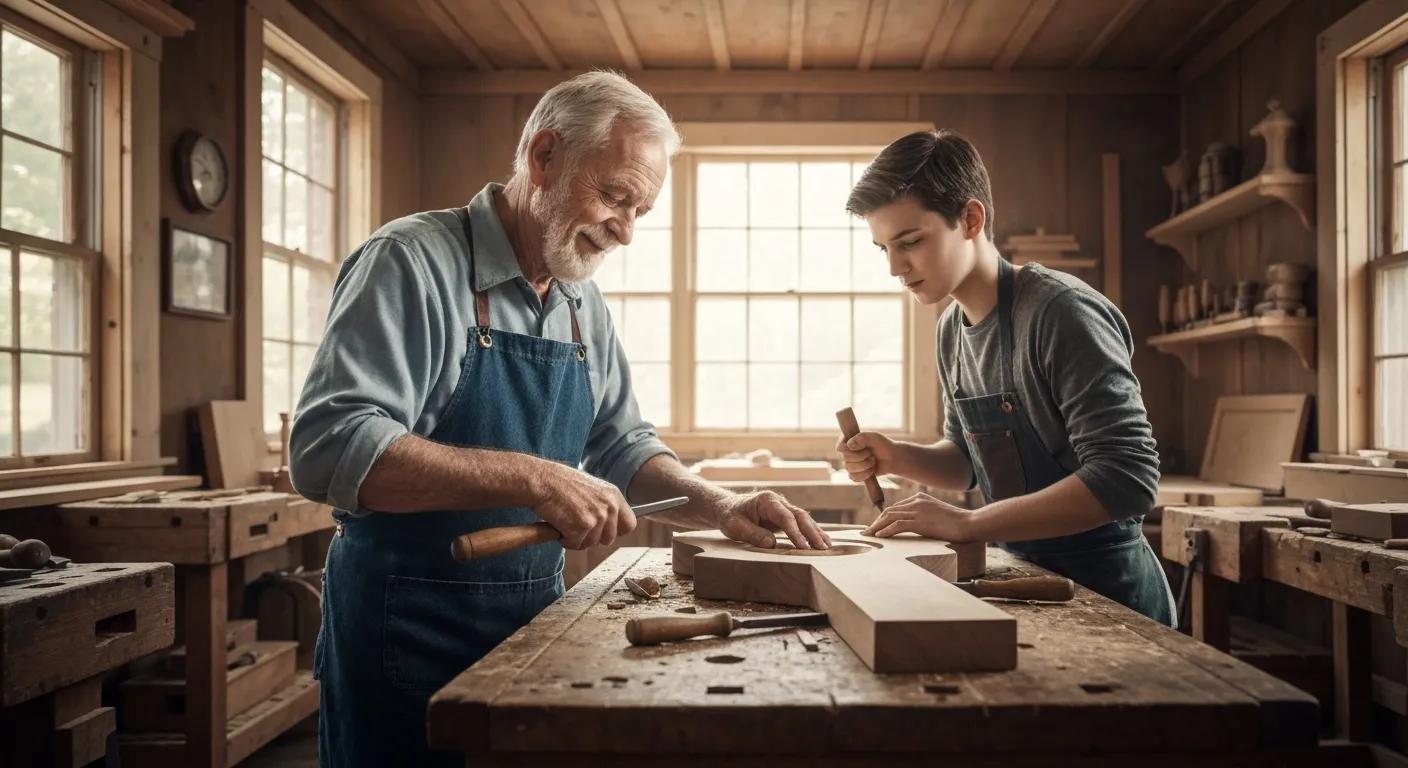
A skilled artisan demonstrates traditional Appalachian woodworking techniques.
What Is the History of Appalachian Woodworking?
Appalachian woodworking originated as a pragmatic response to mountain life: settlers shaped local wood into utensils, furniture, and toys because stores were distant and materials were near at hand. This utilitarian origin produced simple, durable forms and techniques adapted to available wood species such as oak, maple, pine, and chestnut remnants, and those choices shaped both function and aesthetic. Over time the practical skills became cultural shorthand—carvings, furniture details, and toys encoded family stories and local identity while remaining rooted in craft economy and material knowledge. Understanding these origins explains why contemporary makers prioritize material provenance and why modern revival movements aim to preserve techniques that are both useful and expressive.
How Did Early Settlers Shape Appalachian Woodworking Traditions?
Early settlers translated scarcity and landscape into a resilient craft vocabulary that favored multifunctional items and efficient tools, producing spoons, bowls, ladders, and simple furniture from single pieces or split timbers. These practical choices—shaping rather than joining, using froes to split shakes, and employing drawknives for shaping—grew from necessity and reinforced styles that emphasized form following function. The resulting objects were often ornamented with modest carving or chip-work that referenced local flora and fauna, preserving visual motifs linked to place. These patterns of making and embellishment became intergenerational lessons, passed down through family workshops and community markets.
What Was the Impact of the Appalachian Craft Revival Movement?
The craft revival movement reframed utilitarian making as cultural heritage and marketable folk art, creating new venues and audiences for traditional woodworking while encouraging documentation and teaching of techniques. The movement gained significant traction in the early 20th century, with institutions like Berea College in Kentucky playing a pivotal role. Organizations and regional craft networks helped highlight the aesthetic and historical value of carvings, dulcimers, and handmade toys, which supported maker livelihoods and stimulated tourism tied to authentic crafts. Revival activity also encouraged pedagogical forms—workshops and demonstrations—that formalized apprenticeship pathways without erasing informal family transmission. That institutional interest provided a platform for contemporary artisans to interpret tradition while sustaining material knowledge and community economies.
"The craft revival was not just about making things; it was about affirming identity and creating economic opportunity where little existed." — Dr. Loyal Jones, former director of the Appalachian Center at Berea College
How Has Appalachian Woodworking Evolved Over Time?
Appalachian woodworking moved from private necessity to public expression as makers balanced tradition with innovation, blending hand tools with selective power tools and using digital channels to reach buyers beyond local markets. The evolution includes shifts in function—items that were once purely utilitarian are now also valued as decorative folk art or specialty instruments—while makers continue to emphasize native wood types and handwork as authenticity markers. E-commerce and gallery representation have increased visibility for artisans, enabling curated collections that link pieces back to their makers and cultural stories. This evolution demonstrates how craft adapts to contemporary economies while preserving lineage through technique and motif continuity.
How Does Appalachian Woodworking Reflect Cultural Identity and Heritage?
Appalachian woodworking functions as both material culture and narrative device, carrying symbols, community memory, and practical knowledge that together articulate regional identity. Motifs carved into household objects recount local stories—animals, mountain flora, religious and domestic symbols—that tie pieces to everyday life and ancestral memory. Skill transmission occurs largely through family lines, apprenticeships, and community gatherings where hands-on demonstration and storytelling coexist, reinforcing social bonds. Seeing woodworking as folk art clarifies how function, tradition, and community context define authenticity and cultural value.
"Appalachian woodworking is a tangible archive of regional memory, where each cut and joint tells a story of adaptation, resilience, and deep connection to the land." — Dr. Sarah M. Brown, Cultural Anthropologist
What Stories and Symbols Are Common in Appalachian Wood Carvings?
Common motifs include local wildlife, mountain flora, household scenes, and symbolic elements drawn from faith and daily labor; these images often serve as visual shorthand for resilience, place, and lineage. Animal figures—birds, deer, bears—reference hunting traditions and ecological relationships, while stylized leaves and flowers echo foraged landscapes and seasonal cycles. Religious and domestic symbols appear in grave markers, chest panels, and table legs, connecting objects to rites of passage and household memory. These recurring symbols function as both decorative choices and mnemonic devices that preserve communal narratives.
How Do Family and Community Traditions Preserve Woodworking Skills?
Family trade patterns and community workshops sustain skills through direct mentorship, informal critique, and shared tools, enabling techniques to survive in contexts where formal schooling may be absent. Apprenticeship often occurs at kitchen tables, fairs, and guild tables where elders correct posture and grip while telling stories that situate technique within family history. Community events, craft fairs, and gallery shows provide feedback loops and market incentives, encouraging younger makers to continue learning and innovating. These social mechanisms keep techniques alive, maintain quality standards, and provide a pipeline for cultural transmission.
Why Is Appalachian Woodworking Considered a Form of Folk Art?
Appalachian woodworking meets folk art criteria through its rootedness in community practice, emphasis on functional objects, and stylistic consistency derived from shared cultural references rather than formal academic training. Folk art prioritizes meaning and utility: objects are created to be used, to tell stories, and to signify membership in a cultural community, not solely for gallery display. The combination of recurring motifs, shared technique, and communal transmission differentiates these works from individually oriented fine art while giving them distinct cultural importance. Recognizing woodworking as folk art highlights both its social function and its aesthetic lineage.
What Are the Traditional Appalachian Wood Carving Techniques?
Traditional Appalachian carving techniques—whittling, chip carving, and relief carving—offer a spectrum from quick, portable craft to labor-intensive, narrative panel work, and each technique produces distinct textures and expressive possibilities. Whittling uses a single knife to pare and shape small items quickly, chip carving removes geometric chips for decorative patterning, and relief carving raises images from flat panels to tell pictorial stories. These methods map directly to product types: toys and small utensils favor whittling, boxes and panels often use chip carving, and furniture accents or story panels use relief carving. Understanding these techniques helps buyers and makers identify authenticity and craftsmanship levels.
How Is Whittling Practiced in Appalachian Woodworking?
Whittling is a knife-centered technique that reduces wood by controlled paring, producing smooth, compact shapes ideal for spoons, small figures, and children's toys. Practiced informally beside hearths or on porches, whittling emphasizes grain awareness, safe knife control, and economical removal of material to preserve strength and function. Historically, whittling was so ubiquitous that, as early 20th-century folklorists documented, nearly every household in rural Appalachia had at least one member skilled in the craft, often using it for both utility and leisure. Whittled pieces often display tool marks as part of their charm, indicating hand labor and maker intention rather than machine finish. For collectors and parents seeking durable, handmade wooden toys, visible whittling marks can be an authenticity cue.
What Is Chip Carving and How Is It Used?
Chip carving removes small triangular chips using specialized knives to form repeating geometric patterns and decorative panels for boxes, trays, and accent surfaces on furniture. The technique produces sharp, faceted surfaces that catch light and create rhythmic ornamentation, and it requires planning of motifs and careful control of depth to avoid weakening the workpiece. Chip carving often decorates functional items, enhancing utility with deliberate patterning that connects to regional aesthetics. Recognizing chip-carved edges and consistent motif repetition helps identify traditionally executed pieces.
How Does Relief Carving Contribute to Appalachian Wood Art?
Relief carving elevates pictorial scenes from flat panels to create storytelling surfaces on furniture, signage, and framed art, combining narrative content with tool-driven texture for visual depth. This approach demands layered planning—background, midground, foreground—and a suite of gouges and chisels to model forms and suggest movement, shadow, and narrative detail. Relief panels often depict landscapes, household scenes, or mythic moments, turning utilitarian surfaces into mnemonic devices that preserve community memory. As a practiced tradition, relief carving bridges functional carpentry and expressive folk art.
Which Tools Are Essential to Appalachian Woodworking?
Traditional Appalachian woodwork relies on a compact toolkit—froes, drawknives, axes, and adzes—where each tool performs a distinct shaping or splitting role that influences final form and finish. These tools are chosen for how they engage grain, speed production, and create surface textures; makers often prefer them for control and historical continuity. Below is a quick reference that connects tools to technique and example outcomes so readers can visualize how a tool’s action produces specific product types.
Introductory tool list and what each does:
Froes: used to split shakes, shingles, and thin boards along the grain.
Drawknives: shape and pare logs into rounded forms like chair parts and utensil handles.
Axes and adzes: used for rough hewing and hollowing larger timbers before finer shaping.
ToolPrimary Use / TechniqueExample Product ProducedFroeControlled splitting along the grain for flat stockShingles, split bowls, flatware blanksDrawknifeShaving and shaping round or tapered componentsChair rungs, spoon handles, ladlesAxeRough shaping, felling, hewing faces on timbersBench legs, beams, carved polesAdzeHollowing and surfacing concave formsBowls, troughs, initial furniture hollows
What Are Froes and How Are They Used?
Froes are wedge-like blades used with a mallet to split timber along the grain, producing thin, consistent boards or shake material that preserves strong fiber orientation. Makers use froes to create flat elements like shingles, split bowls, and thin panels, favoring this method when grain continuity and strength are priorities. Froe work often yields visible split faces and ragged fiber ends that indicate hand-splitting rather than sawing, signaling traditional technique to knowledgeable buyers. Safety practice and proper mallet technique ensure controlled splits and efficient material yield.
How Do Drawknives Shape Appalachian Wood Crafts?
Drawknives are pulled toward the maker to shave and round pieces of wood quickly, granting expressive control over curvature and surface finish for items like chair components, spindles, and utensils. The tool’s action removes thin shavings and can leave parallel tool marks that become part of the aesthetic or are smoothed later, depending on the maker’s intention. Drawknife work requires stable bracing and an understanding of grain direction to avoid tear-out and achieve clean curves. Regular blade sharpening and handle maintenance keep drawknives effective for sustained shaping tasks.
What Roles Do Axes and Adzes Play in Woodworking?
Axes and adzes perform heavy stock removal and rough shaping, with axes breaking down logs and adzes hollowing or flattening curved surfaces for bowls and furniture seats. Historically these tools established a piece’s general form before finer tools refined detail, and contemporary makers still use them for the economy of material removal and for the textured surfaces they can produce. The rough-hewn character from adze or axe can be left as aesthetic evidence of traditional manufacture or planed away when a refined finish is desired. These tools thus bridge raw timber to finished artifact through staged shaping workflows.
What Types of Handmade Appalachian Wood Products Are Unique?
Appalachian woodworkers produce a distinctive range of objects—wooden toys and dolls, dulcimers and other folk instruments, household implements, and narrative folk carvings—each category reflecting specific techniques, materials, and cultural roles. Product types map to technique: whittled toys, chip-carved boxes, relief-carved panels, and instrument-making that requires acoustic considerations. Below is a compact table connecting product categories to materials and cultural meaning so readers can assess both form and provenance when evaluating pieces.
A beautifully crafted Appalachian dulcimer, a testament to regional musical traditions.

Product TypeTypical Materials / TechniquesCultural Significance / ExampleWooden Toys & DollsSoft hardwoods, whittling, simple joineryPlay objects that mirror local life and teaching traditionsDulcimers & InstrumentsTonewoods like maple, careful carving/assemblyCentral to musical transmission and communal gatheringsFunctional Household ItemsOak, maple; froe-splitting, drawknife shapingEveryday utility that preserves material knowledgeFolk Art CarvingsRelief carving on panels or furnitureVisual storytelling of landscape, family, and labor
What Are the Characteristics of Appalachian Wooden Toys and Dolls?
Appalachian wooden toys tend to be compact, durable, and carved for simplicity, often reflecting local animals, vehicles, or domestic scenes that mirror children’s environments and play patterns. Construction favors hard-wearing joinery or single-piece whittling to prevent small parts from loosening, and finishes are typically food-safe oils or simple waxes for safety. These toys are valued both for play and as heirloom artifacts that transmit design vocabulary across generations. When assessing authenticity, look for tool marks, simple construction, and locally resonant motifs.
How Are Dulcimers and Musical Instruments Crafted in Appalachia?
Dulcimer construction blends acoustic science with local tradition: makers select resonant tonewoods, carefully carve or bend soundboards, and tune string spacing to regional playing styles that favor modal folk repertoires. Luthiers balance structural bracing and soundhole design to maximize warmth and sustain while preserving visual motifs through carved headstocks or decorative panels. Instruments carry communal value—played at gatherings, dances, and storytelling sessions—so material choices and aesthetic cues often reference regional identity. For buyers, provenance and maker notes are key indicators of craft and voice.
What Functional Household Items Are Made Through Appalachian Woodworking?
Functional household items range from spoons and bowls to benches and small tables, produced to robust standards using drawknife shaping, froe-split stock, and hand finishes that age gracefully with use. Wood selection targets durability and grain character, with finishes chosen for food contact or heavy wear, and makers often sign pieces or include maker marks as provenance. These utilitarian objects are practical carriers of design language and are prized for their capacity to integrate beauty into daily routines. Proper care and maintenance extend their life and preserve both function and story.
How Do Folk Art Carvings Capture Appalachian Life and Nature?
Folk art carvings condense landscape, labor, and local myth into imagery that hangs on walls, furniture, or commemorative objects, using relief carving and chip-work to create narratives readable at a glance. These pieces often juxtapose animals, crops, mountain silhouettes, and domestic scenes to form palimpsests of place, memory, and social values. Makers may deliberately incorporate stylistic markers—repeated motifs, specific leaf forms, or geometric borders—that link a piece to a community style. Collectors value these carvings not only for visual appeal but for the stories and identities they preserve.
Who Are the Notable Appalachian Woodworking Artisans from West Virginia and Kentucky?
Regional artisans from West Virginia and Kentucky represent distinct but overlapping approaches to Appalachian woodworking, drawing on state-specific materials and community histories while sharing motifs and techniques across borders. West Virginia makers often foreground coalfield and mountain narratives in their work and may use locally salvaged woods and revival-era motifs, while Kentucky artisans frequently emphasize instrument-making and decorative chip-carving traditions tied to their cultural circuits. Both sets of artisans contribute to a living network of craft practice that supports local economies and cultural continuity. The following subsection explains typical artisan backgrounds and how gallery representation supports these maker communities.
What Are the Stories Behind West Virginia Woodworking Artisans?
West Virginia artisans commonly emerge from family lines, rural workshops, and community craft networks where skills are transmitted informally and adaptively, shaping work that references both labor and landscape. Their pieces often reflect practical origins—sturdy joinery, compact utensils, and carved narrative panels—that speak to domestic life and regional memory. Artist narratives frequently include community markets and gallery exhibitions as platforms for connecting work to broader audiences while maintaining local meaning. These stories help buyers appreciate the cultural content of each piece beyond its material form.
How Do Kentucky Woodworkers Contribute to Appalachian Craft Traditions?
Kentucky woodworkers contribute distinct sensibilities—strong traditions in instrument-making, refined chip-carving, and furniture detailing—that complement and cross-pollinate with West Virginia practices. Kentucky makers may emphasize musical lineage through folk instruments and decorative detailing that supports performance traditions, while shared Appalachian motifs create continuity across the region. Collaboration and regional shows foster exchanges that sustain technique diversity and promote adaptive reuse of local timbers. This cross-state synergy strengthens the larger Appalachian craft ecosystem.
How Does Old Mountain Field Support Local Appalachian Artisans?

A curated collection of Appalachian wooden crafts on display at a gallery.
Old Mountain Field Fine Arts & Crafts is a women-owned artisan collective and gallery located in the historic Matewan Depot Replica in Williamson, West Virginia, that represents over 40 artisans from West Virginia and Kentucky. The collective’s mission is to celebrate Appalachian heritage, uplift local artisans, and share their handmade crafts with wider audiences through curated exhibitions and a focused Woodworks category that showcases wood carvings, wooden toys, and other functional wooden pieces. Readers can learn more about their mission and team on their About Us page and explore their full range of offerings in their online gallery. A 2022 study by the West Virginia Department of Arts, Culture and History highlighted that craft galleries and collectives are crucial for sustaining over 60% of independent artisans in the state, providing vital market access and promotional support. By providing representation, a physical gallery anchor in a historic site, and curated presentation, the collective creates market pathways while preserving maker stories and provenance. This model strengthens artisan livelihoods and connects collectors to authentic, community-rooted work.
Where Can You Find and How Do You Care for Authentic Appalachian Wood Products?
Authentic Appalachian wood products are best sought through venues that provide maker provenance, material descriptions, and visible evidence of handwork; once acquired, maintaining these pieces requires simple, regular care such as gentle cleaning, oiling finished surfaces, and humidity management. Buyers should favor sellers who document maker background and technique, and they should look for tool marks, local wood species, and handmade construction as authenticity cues. Care extends the life of objects and honors the cultural labor invested in them; the following subsections outline purchasing channels, practical maintenance steps, and why purchases matter for cultural preservation.
Where Can You Buy Genuine Handmade Appalachian Wood Crafts?
Genuine pieces are available through curated galleries and artisan collectives that represent regional makers and provide contextual information about materials and methods, as well as through local craft markets and select online galleries that emphasize provenance. For example, the Woodworks category curated by Old Mountain Field Fine Arts & Crafts highlights handcrafted wooden toys, carved pieces, and functional wares from West Virginia and Kentucky artisans and the gallery’s physical location in the Matewan Depot Replica offers a place-based encounter with these works. When evaluating authenticity, buyers should check for maker attribution, natural imperfections consistent with hand tools, and descriptions of wood species and finish to ensure an informed purchase. Choosing venues that document artisanship maximizes cultural impact and buyer confidence.
How Should You Care for and Maintain Appalachian Woodworking Items?
Proper care keeps handmade wooden items functional and expressive: routine dusting with a soft cloth, occasional wiping with a slightly damp cloth followed by thorough drying, regular application of food-safe oil on utensils and bowls, and stable indoor humidity to prevent splitting are essential practices. Avoid harsh detergents, prolonged soaking, or exposure to direct heat that can warp or crack timbers; for finished furniture, periodic wax or oil maintenance preserves patina and surface integrity. Below is a practical care checklist presented as a table to guide frequency and tools for common maintenance tasks.
Care TaskRecommended Method / ToolFrequency / ExampleDustingSoft lint-free clothWeekly for display piecesCleaningDamp cloth + immediate dryingAs needed after light soilingOiling (utensils/bowls)Food-safe oil, soft ragMonthly or when wood appears dryHumidity controlUse humidifier/dehumidifier as neededMaintain 35–55% RH seasonally
Why Is Supporting Appalachian Woodworking Important for Cultural Preservation?
The National Endowment for the Arts emphasizes that traditional arts, like Appalachian woodworking, are "living cultural treasures" whose preservation is essential for maintaining the diversity of American heritage and fostering community pride. These practical steps empower responsible collecting and reinforce the social systems that keep Appalachian woodworking vital and relevant.
Seek provenance: Prioritize pieces with maker attribution and material disclosure.
Value handwork: Look for tool marks and variations that indicate handcrafted production.
Commit to care: Apply simple maintenance routines to extend both function and story.
Frequently Asked Questions
What are the key differences between traditional and contemporary Appalachian woodworking?
Traditional Appalachian woodworking focuses on utilitarian objects crafted using hand tools and techniques passed down through generations. It emphasizes functionality and local materials, often reflecting the cultural identity of the region. In contrast, contemporary woodworking incorporates modern tools and design aesthetics, blending traditional methods with innovative practices. This evolution allows artisans to create both functional and decorative pieces that appeal to broader markets while still honoring their cultural roots. Understanding these differences helps buyers appreciate the craftsmanship and stories behind each piece.
How can I identify authentic Appalachian wood products?
To identify authentic Appalachian wood products, look for several key indicators: maker attribution, visible tool marks, and the use of local wood species. Authentic pieces often showcase natural imperfections that reflect handcrafting rather than mass production. Additionally, inquire about the materials and techniques used, as reputable sellers will provide this information. Engaging with artisans at local craft fairs or galleries can also enhance your understanding of authenticity, as you can hear the stories behind the pieces directly from the makers.
What role do storytelling and community play in Appalachian woodworking?
Storytelling and community are integral to Appalachian woodworking, as each piece often carries narratives that reflect local history, culture, and personal experiences. Artisans frequently incorporate symbols and motifs that resonate with their community, creating a sense of belonging and shared identity. Workshops and gatherings serve as platforms for passing down techniques and stories, reinforcing social bonds. This communal aspect not only preserves the craft but also enriches the cultural fabric of the region, making each handcrafted item a vessel of collective memory.
What are some common challenges faced by Appalachian woodworkers today?
Appalachian woodworkers face several challenges, including competition from mass-produced items, which can undermine the market for handmade goods. Additionally, access to quality materials can be limited, especially as local forests face environmental pressures. Economic factors, such as fluctuating demand and the need for sustainable practices, also pose challenges. Many artisans strive to balance traditional techniques with modern business practices to remain viable while preserving their craft. Support from local communities and consumers who value authenticity is crucial for their continued success.
How does Appalachian woodworking contribute to local economies?
Appalachian woodworking significantly contributes to local economies by creating jobs, supporting small businesses, and attracting tourism. Artisans often sell their work at craft fairs, galleries, and online platforms, generating income that circulates within the community. Additionally, workshops and classes foster skill development and entrepreneurship, empowering individuals to start their own businesses. The cultural heritage associated with woodworking also draws visitors interested in authentic experiences, further boosting local economies through tourism and related services.
What are the environmental considerations in Appalachian woodworking?
Environmental considerations in Appalachian woodworking include sustainable sourcing of materials, responsible forest management, and minimizing waste. Artisans often prioritize local wood species to reduce transportation impacts and support regional ecosystems. Many also adopt eco-friendly practices, such as using non-toxic finishes and recycling wood scraps into smaller projects. By emphasizing sustainability, woodworkers not only preserve their craft but also contribute to the health of their environment, ensuring that future generations can continue to enjoy and practice Appalachian woodworking.
How can I support Appalachian woodworkers and their craft?
Supporting Appalachian woodworkers can be done in several meaningful ways. Purchase authentic handmade items directly from artisans at local craft fairs, galleries, or online platforms that emphasize provenance. Share their work on social media to increase visibility and appreciation for their craft. Additionally, consider participating in workshops or classes to learn about the techniques and stories behind the craft. Engaging with the community and advocating for the importance of preserving traditional skills can also help sustain this vital cultural heritage.

What Do Customers Say About Us?
OMFFAC is my go to place to find a meaningful gift. So many handmade, beautiful options to choose from. I never fail to find the perfect gift there.
Maryanne Leandro

Supporting this shop means supporting real people with real talent. I love knowing my purchase helps keep creativity alive right here in our community.
Donese Sheppard
Old Mountain Field doesn’t disappoint and has something for everyone. Handcrafted in the heart of the Mountains and a one-stop shop for unique West Virginia goods, full of charm and variety
Crystal A. Moore
The best thing about Old Mountain Field is there is something for just about anyone. Whether buying for a baby or an old timer you can always choose from beautiful, handmade, quality items made right here in West Virginia or Kentucky.
Sarah Johnson
Our Story
How Old Mountain Field
Got its Start
Old Mountain Field Fine Arts & Crafts was founded to showcase the incredible talent of artisans across West Virginia and Kentucky. Our mission is simple: to preserve heritage crafts, provide opportunities for local makers, and share Appalachian artistry with the world.
From hand-thrown pottery and heirloom quilts to delicate jewelry and stained glass, our collections represent both the history and the future of mountain-made craftsmanship. When you purchase from us, you’re not only bringing home a unique work of art—you’re also helping sustain the communities and traditions that make Appalachia so remarkable.
The Value of Staying in Touch
Be the first to hear about new artisan arrivals, upcoming events, and stories from the mountains. Join our Old Mountain Field family and let a little bit of Appalachian craftsmanship find its way to your inbox.
Questions?
Our doors — and inbox — are always open. Reach out with your questions, ideas, or just to say hello. Every conversation helps us keep Appalachian crafts alive and thriving.